The Architecture
Salesforce CTI, built native.
Other tools connect to Salesforce. WorkDial runs inside it, a Salesforce-native CTI platform where calls, recordings, and AI analysis are written as native Salesforce objects from the moment they happen.
Voice · WhatsApp voice · AI call analysis · all inside Salesforce
What is Salesforce-native CTI?
Voice calls, WhatsApp voice, and AI call analysis run inside Salesforce, not connected to it from the outside. Calls are written as Call__c, the recording as Recording__c, transcripts as Transcript__c, and sentiment as Sentiment__c, with the recording audio kept where you choose. There is no middleware, no second system of record, and no external copy of your call data to sync or reconcile.
 ValueText
 Built by the team behind ValueText, the Salesforce-native messaging platform, rated 4.97 stars across 116 AppExchange reviews.
01The second system of record
What breaks when the call lives outside Salesforce?
Every other CTI tool runs a second system of record: the call, recording, and AI insight are born in the vendor's cloud, then synced into Salesforce as a copy. Salesforce ends up the destination, not the source.
A pipeline you cannot trust
The call lives in the vendor database and Salesforce gets a copy. You run two systems of record for one conversation. The forecast reflects what synced, not what happened.
Sync failures, silent gaps
Middleware drifts, fails quietly, and leaves gaps between the two systems. Nobody notices until a report is wrong or a deal is missed because the call never logged.
Automation that does not fire
Salesforce Flow cannot trigger on a call event that never became a native record. The automation you built for call outcomes, sentiment, or routing does not fire.
Your conversations in someone else's cloud
Your most sensitive data, the conversation itself, sits in a vendor database under separate rules you also have to govern. That is a second security perimeter, not a simpler one.
02Native vs integrated
Native or integrated: what is the difference?
Integrated tools connect to Salesforce from outside. WorkDial inverts that: the call is a Salesforce record from the start, not a synced copy. See native vs integrated CTI, the comparison, and the best Salesforce CTI apps in 2026 ranked by where the call record lives.
Where does your call data actually live?
Call data is written as native Salesforce objects. Your recordings go where you choose: as native Salesforce Files in your own org, in your own Twilio, or in your own cloud storage. WorkDial keeps no copy of its own. The only component outside Salesforce is the telephony transport that carries the call, and it stores none of your data. See how native security works, and why WorkDial runs inside Salesforce instead of integrating with it.
03What runs inside Salesforce
One platform, three capabilities, all inside Salesforce.
Each capability has its own page: the Salesforce dialer, WhatsApp voice calls, and AI call analysis. All three write to the same native objects, so the architecture here holds for each. Book a live walkthrough.
Salesforce dialer
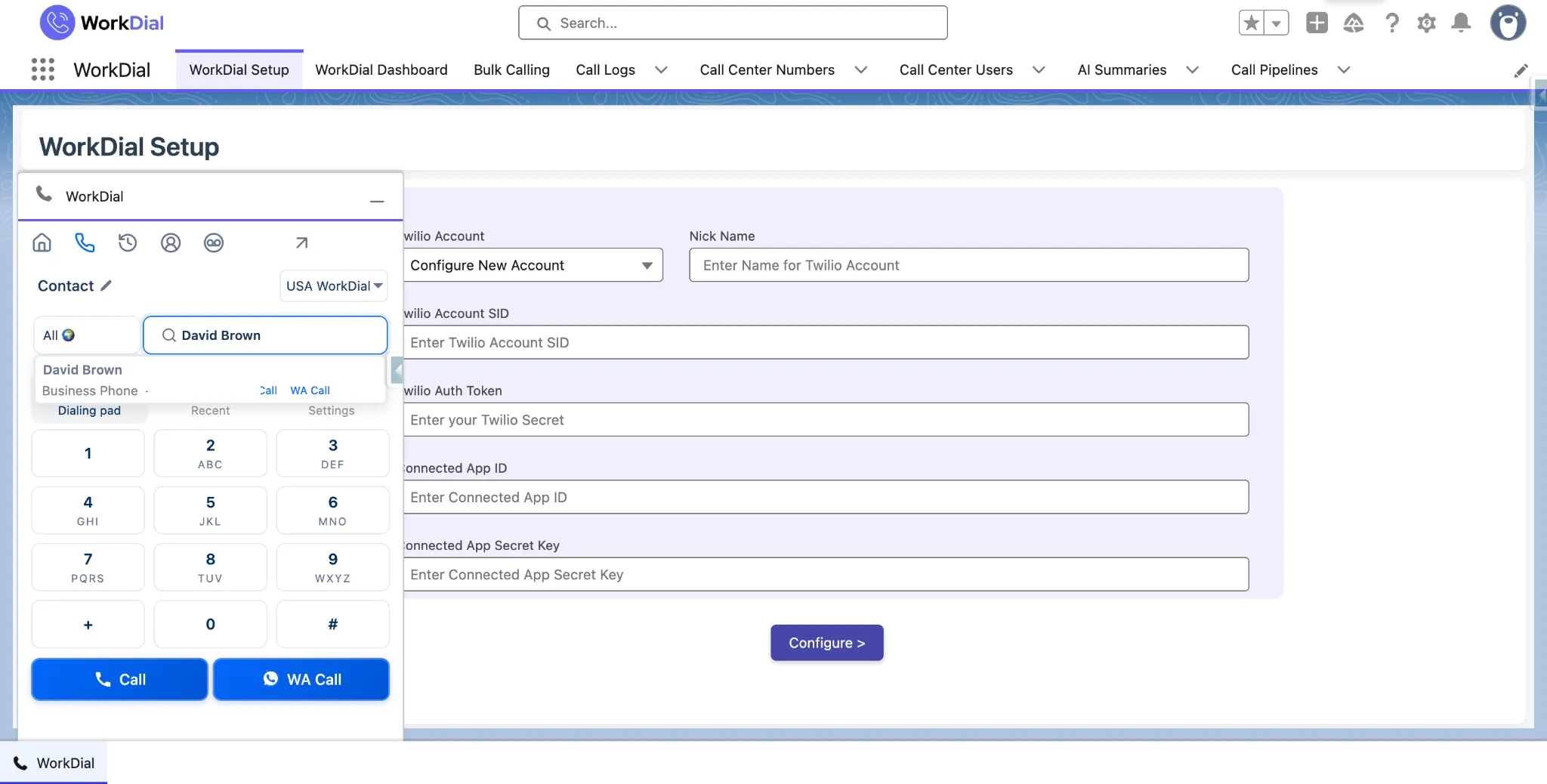
Click to call from any record. The call is logged as Call__c and the recording as Recording__c. Inbound routing and call-center handling are a mode of the same voice layer.
WhatsApp calling
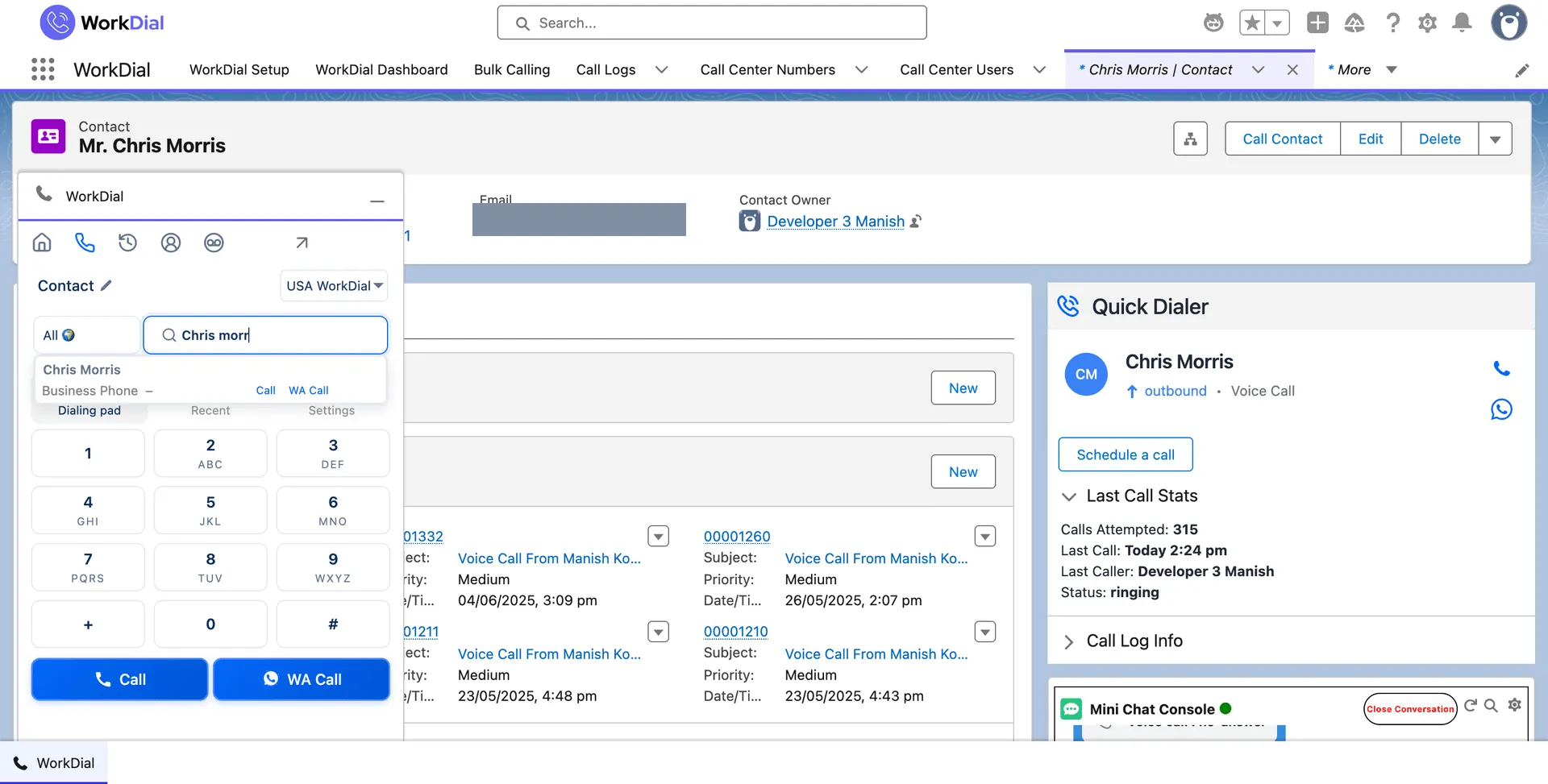
WhatsApp voice calls placed and logged inside Salesforce, written to the same objects as any other call. One calling layer, two channels.
AI call analysis
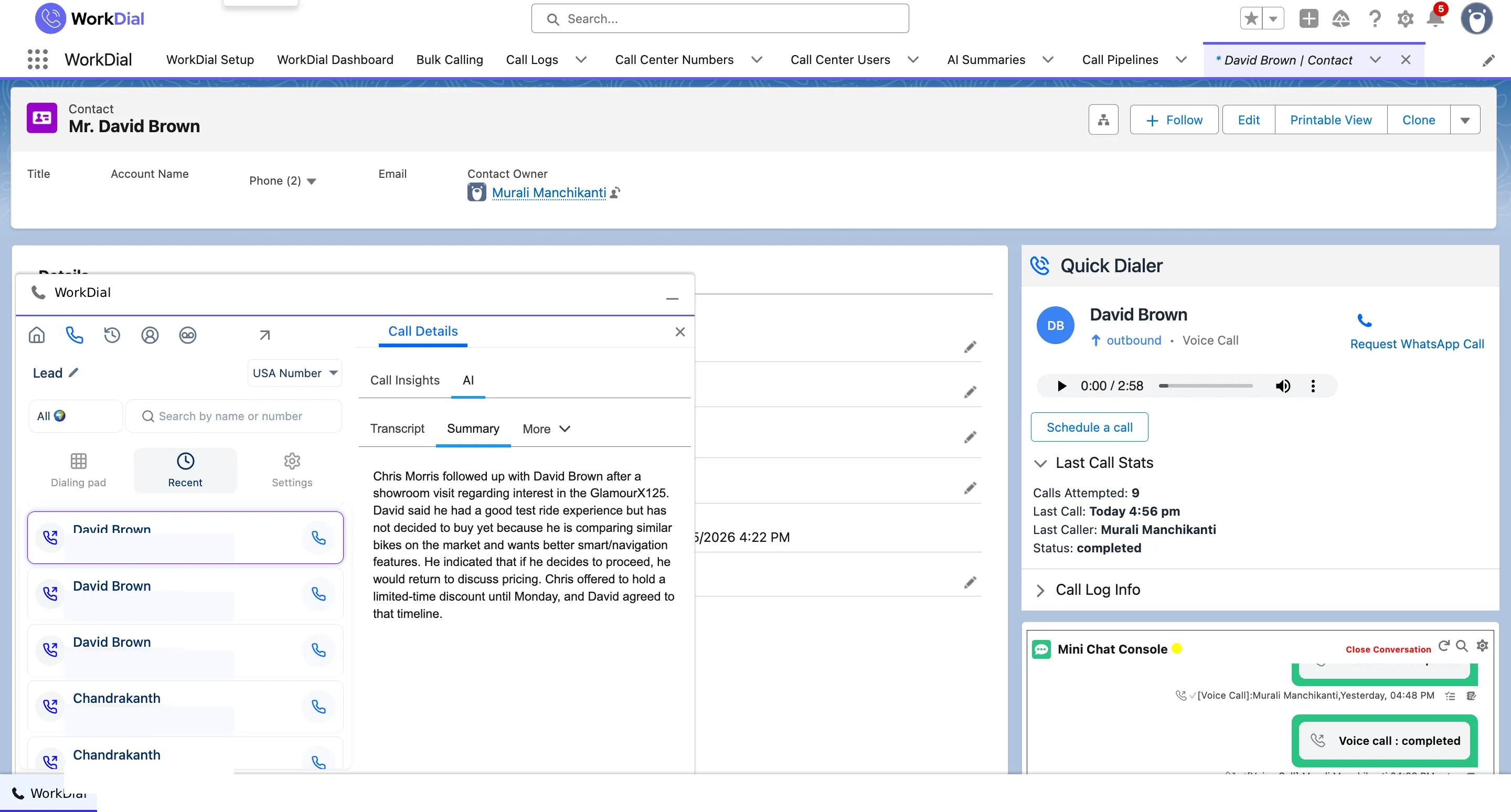
Transcripts, sentiment, and summaries written to the record as Transcript__c and Sentiment__c, queryable the moment the call ends.
04A pipeline you can trust
Every call logs itself. Your reports show what happened, not what got typed.
When the call is a Salesforce record from the moment it happens, nothing syncs in, nothing breaks, and nothing needs reconciling. The pipeline is complete because there is no second system to fall behind.
Flow triggers on call events
Salesforce Flow fires directly on a new call, a sentiment value, or a transcript. No middleware in between, no polling, no delay.
how Flow fires on call eventsReports on the same data, no export step
Calls, outcomes, and sentiment are standard Salesforce fields. They report alongside the rest of your pipeline without an export, a connector, or a third tab.
CTI dashboards without an export stepOne security model, not two
Sharing rules, permission sets, and field-level security already govern the data. You choose where recordings live. WorkDial keeps no external copy of its own.
how security works05The complete stack
WorkDial is the voice layer of Salesforce. ValueText is the messaging layer. Together they are the complete communication stack, native to Salesforce.
WorkDial is buyable on its own at published pricing. Add ValueText as the complete stack when you want messaging in the same org.
 WorkDial voice · whatsapp voice · ai ValueText sms · whatsapp · messaging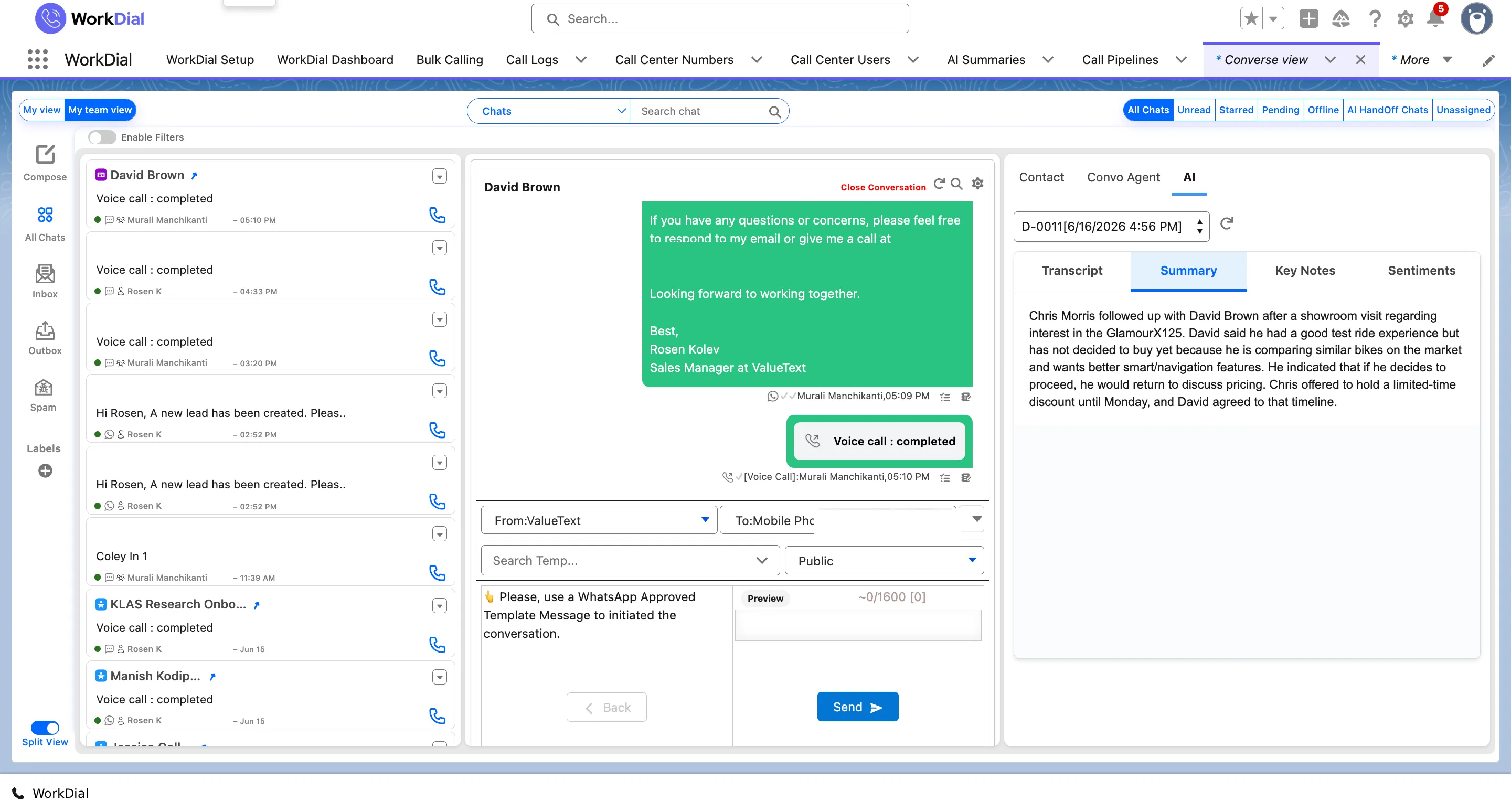
Questions
Salesforce CTI, answered
What is Salesforce CTI?
Is WorkDial a Salesforce softphone?
What is the difference between native and integrated Salesforce CTI?
Is WorkDial really native, or an integration?
How does WorkDial relate to Salesforce Open CTI?
Does WorkDial replace a separate call center platform?
Does Salesforce CTI from WorkDial include AI?
Which Salesforce editions and clouds does it work with?
What does it cost to run Salesforce CTI with WorkDial?
Common questions
Sourced answers to the questions buyers ask.
Short, cited answers to the Salesforce CTI questions teams work through before they choose. See all answers.
- Native vs integrated Salesforce CTI: where does your call data live?
- What is the best native Salesforce CTI?
- What is the true cost of a Salesforce CTI?
- What does a Salesforce dialer actually cost per user?
- What happens to a RingCentral integration when Open CTI retires in 2028?
- Is Agentforce Contact Center a fit for a small Salesforce team?
Get started
Run your calling inside Salesforce.
4.97★ across 116 AppExchange reviews · from the team behind ValueText, the Salesforce-native messaging platform