
Salesforce CTI, in the record
A softphone that opens on the record, not beside it.
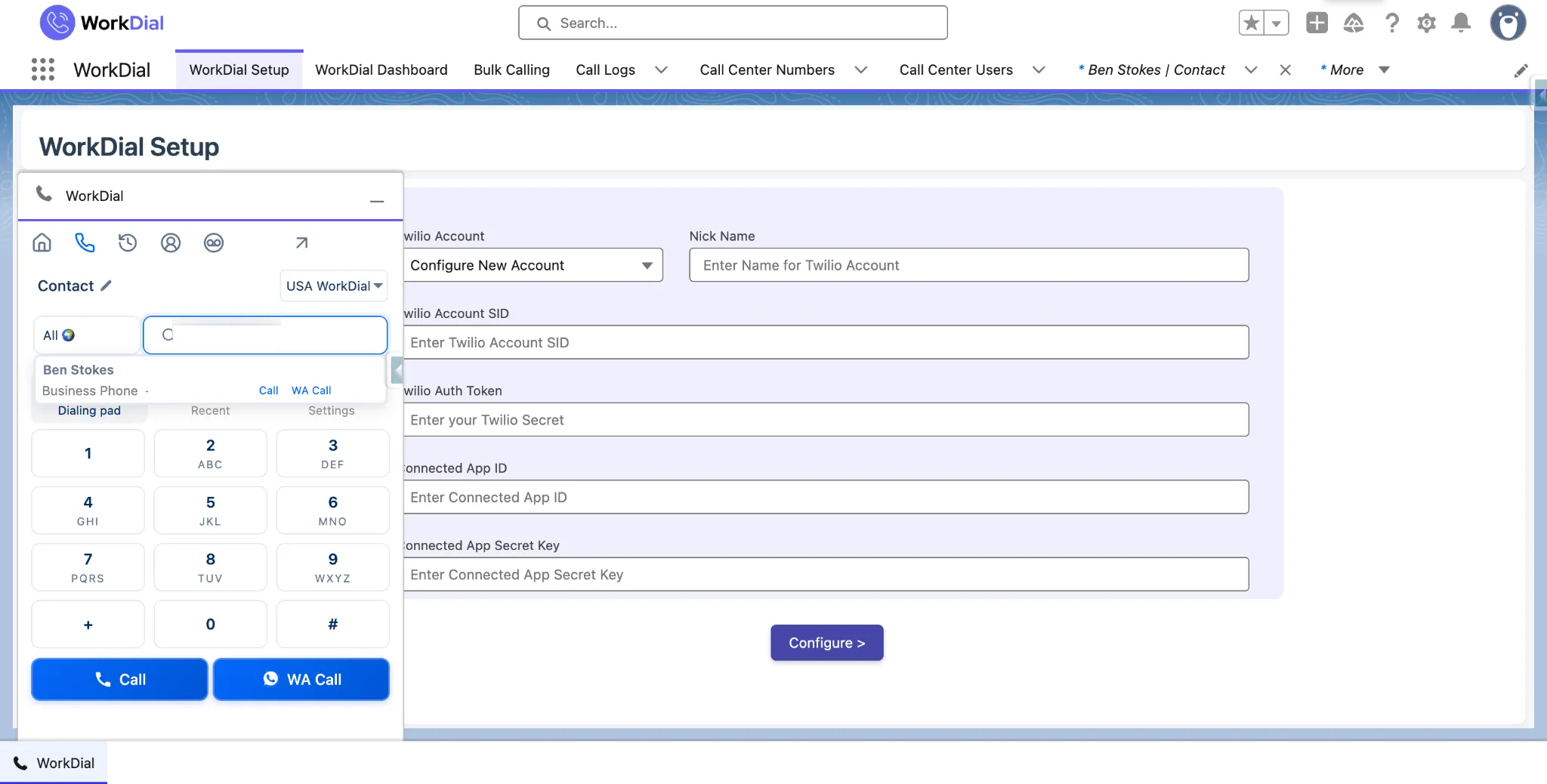
A connected softphone is a second window, and the records never quite agree. WorkDial is a Salesforce-native CTI platform. The panel is part of Salesforce, so you dial from the record in front of you.
Included from Core at $28/user/mo · BYOA (bring your own Twilio)
What is a Salesforce softphone?
A softphone is a phone handset rendered in software, so calls are placed from the computer rather than a desk phone. A Salesforce softphone puts that handset inside the Salesforce interface: the rep dials from the record they are reading, and mute, hold, transfer, and notes sit beside the customer's history. In WorkDial the panel is part of Salesforce, not an external application joined by an adapter.
 ValueText
 Built by the team behind ValueText, the Salesforce-native messaging platform, rated 4.97 stars across 116 AppExchange reviews.
01The cost of a second window
What does a bolted-on softphone cost per call?
Context is one window away. The number is in the softphone and the history is in Salesforce. The rep dials while looking at the wrong screen.
Notes are written twice, or once and badly. Typing into the dialer means retyping into the CRM later. Post-call admin is the tax on the conversation.
An adapter is a dependency. Open CTI adapters are software you host and keep compatible with each Salesforce release. Every upgrade is a thing that can break the phones.
The dialer owns the record. Call history lives in the vendor's database and arrives in Salesforce as a copy, so the report you trust is downstream of a sync.
02What the panel does
Dial and file in one panel.
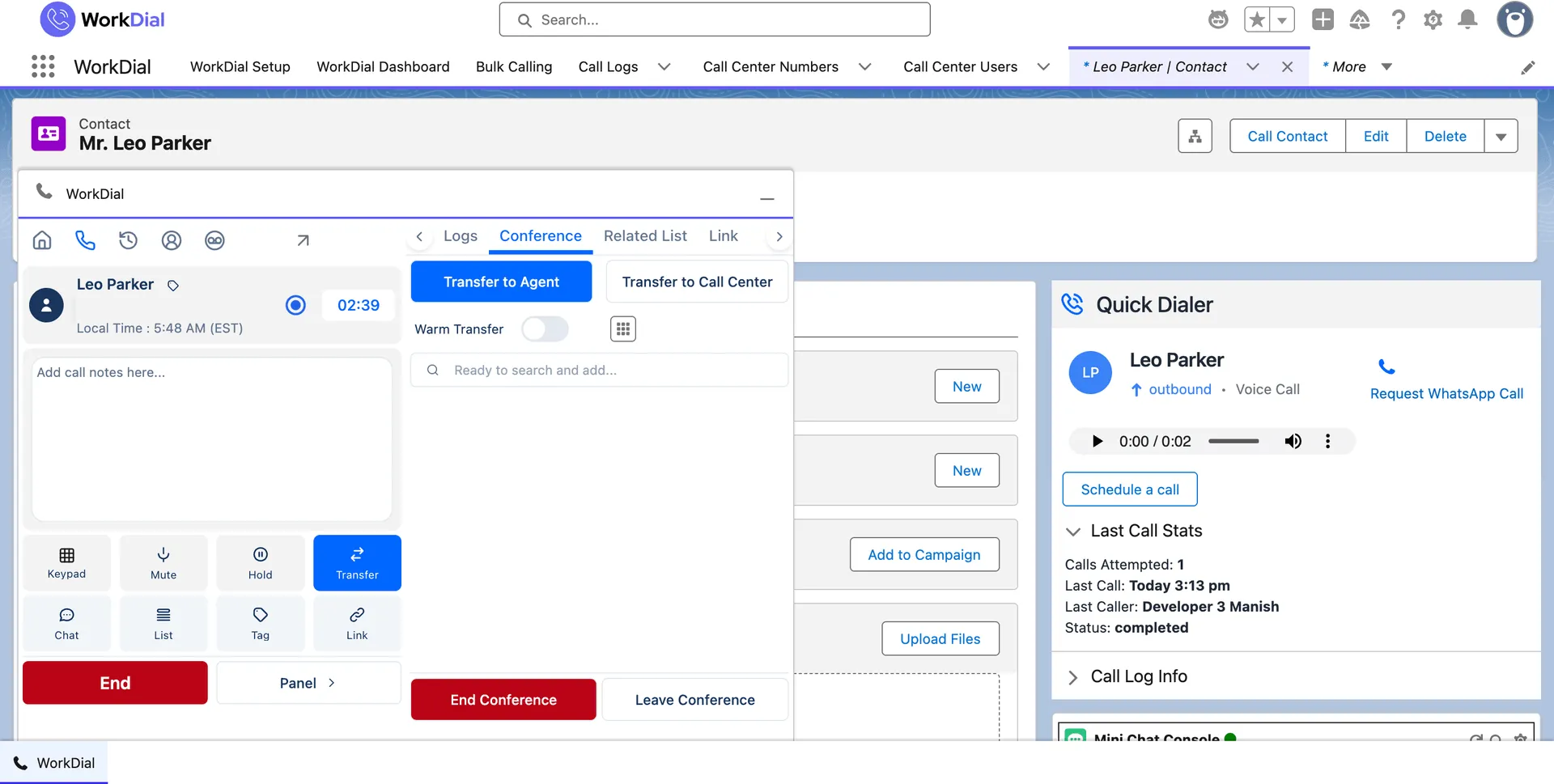
Search by name, not by number. Mute, hold, and transfer in the panel. Notes land on the record as you type them.
See it live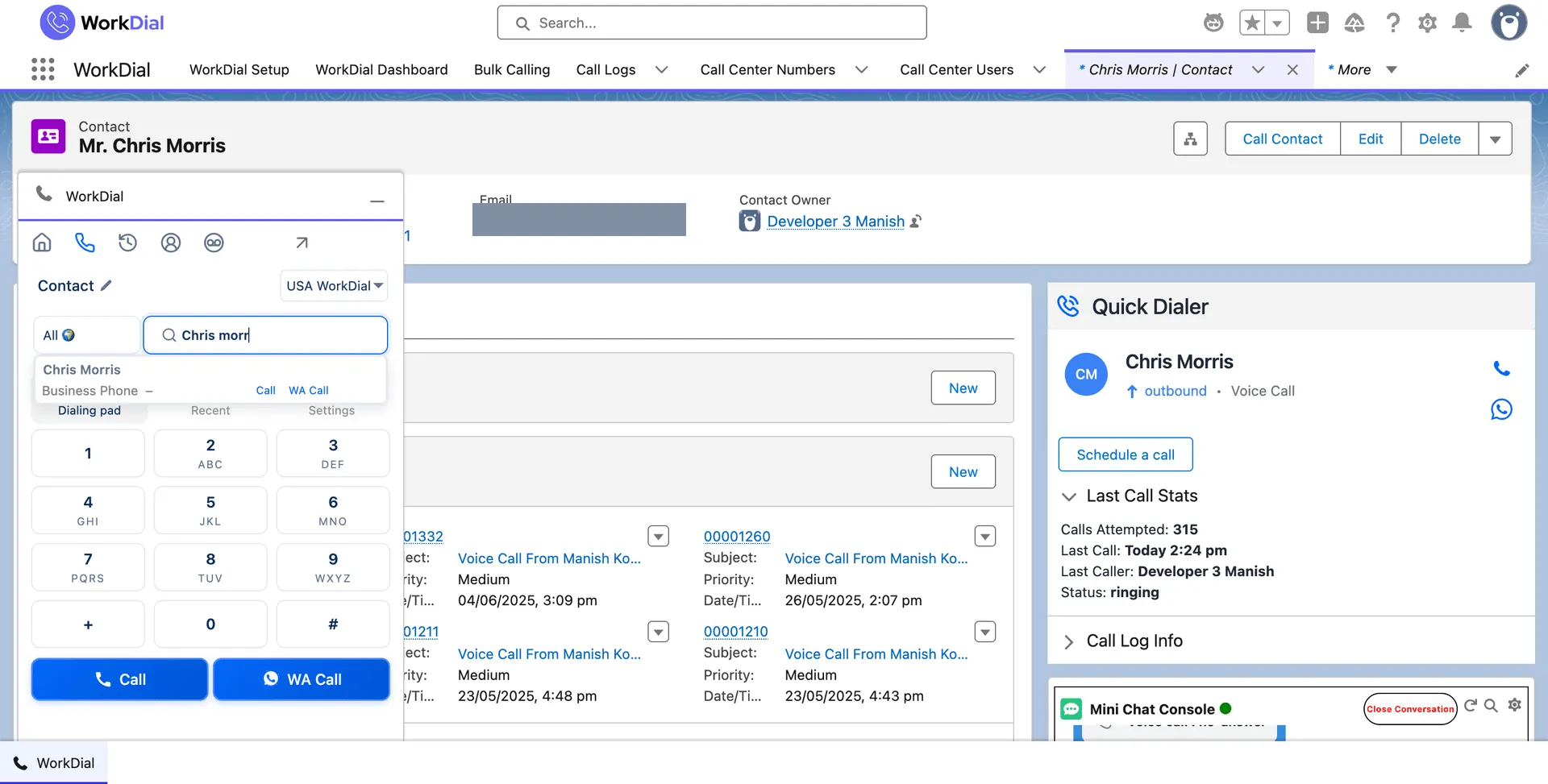
Dial by name. The panel searches your Salesforce records, so the rep types a person rather than pasting a number. The call is bound to that record before it connects, which is why it can log itself afterwards.
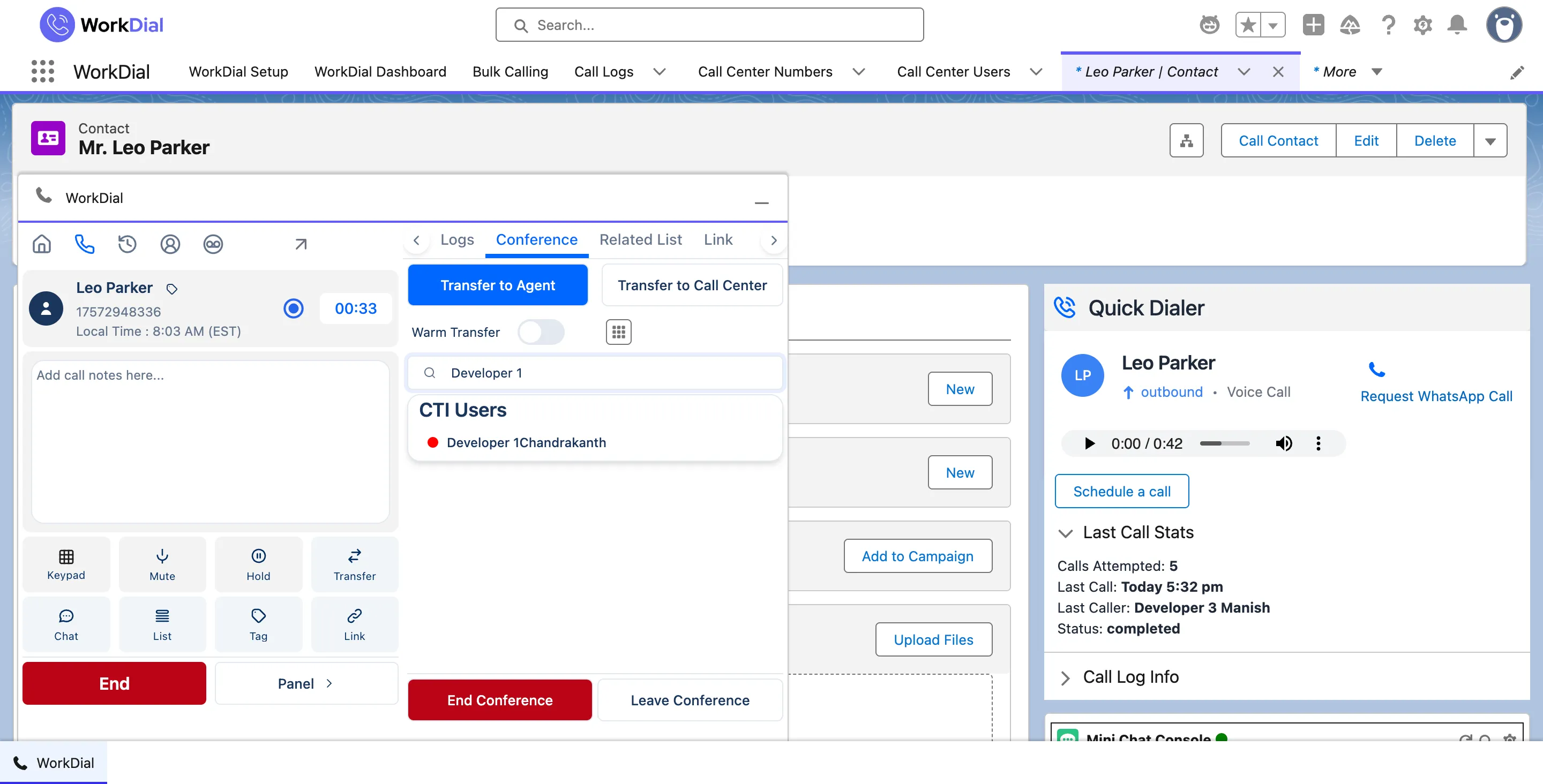
Full handset controls. Mute, hold, transfer, and a number pad for extensions and IVR menus. Everything a desk phone does, in the panel beside the record, so nothing about the call requires another window.
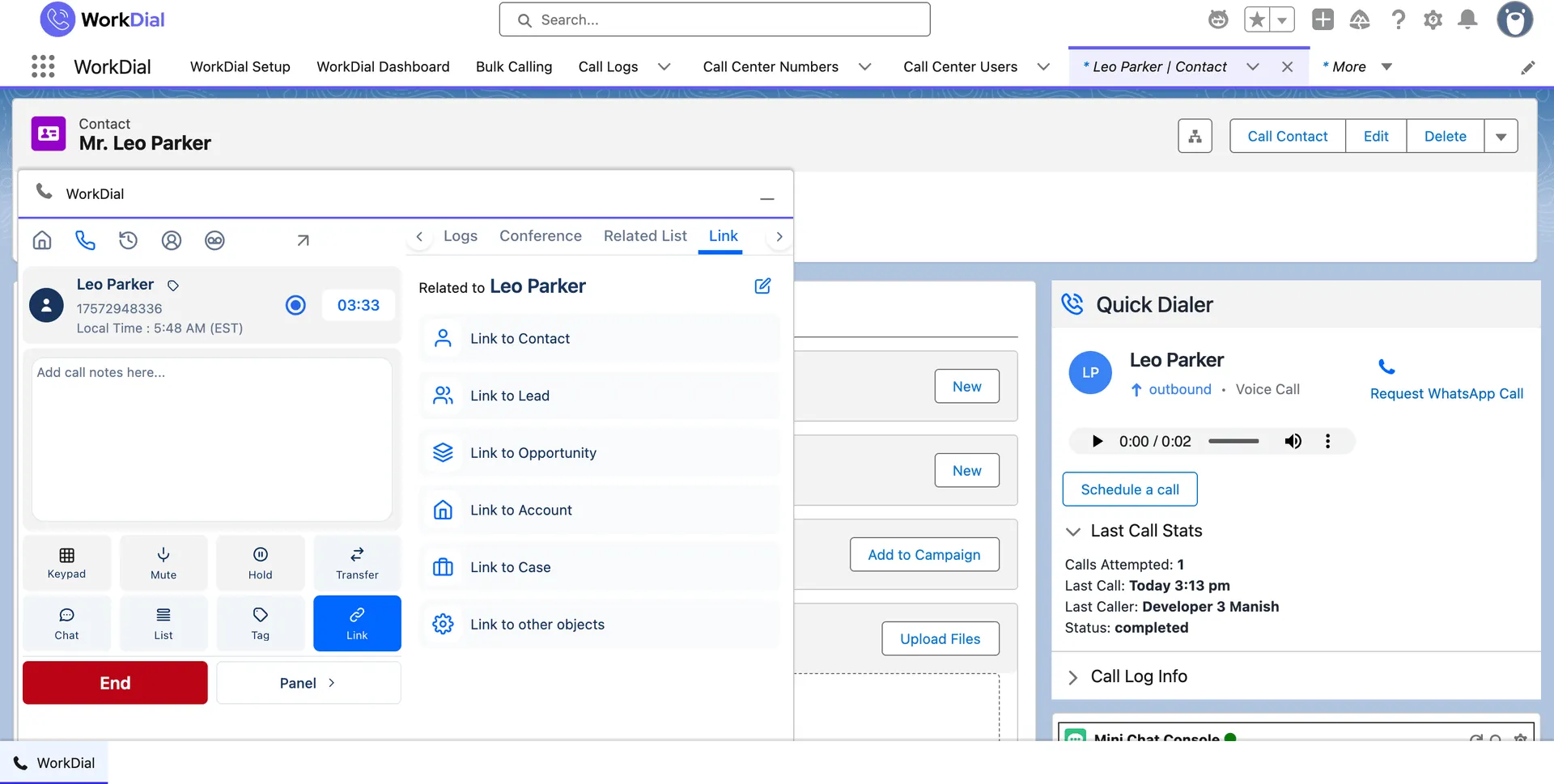
Relate the call while talking. A call that turns out to be about a different opportunity or case is linked to it during the call, so the history is correct without anyone tidying it up later.
03Off the desk
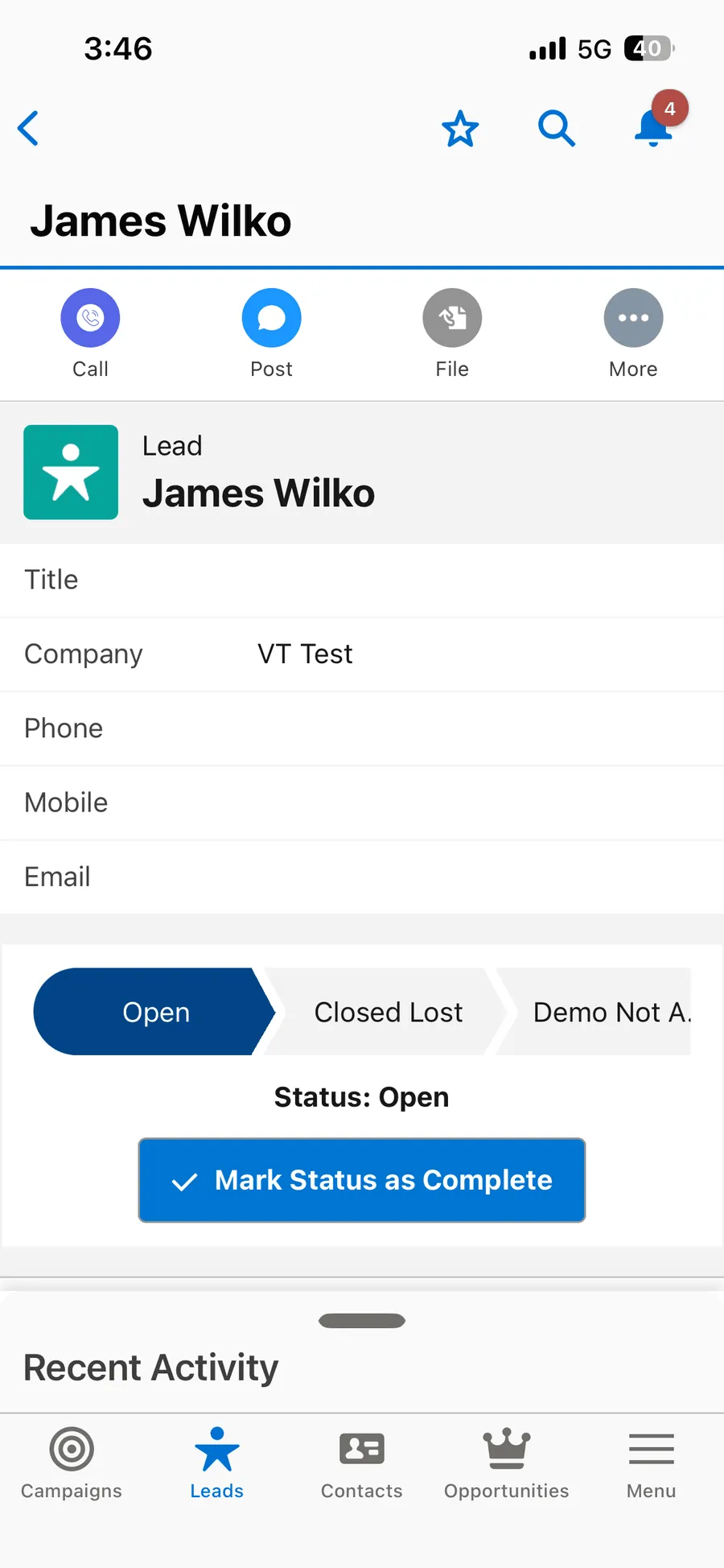
The same record, from a phone.
Calls from a mobile device write the same Call__c record. Transfers stay attached to the record they started on.
04How the architecture differs
Part of Salesforce, or connected to it.
RingCentral, Aircall, Dialpad, and Kixie reach into Salesforce through an adapter and keep call data in their own database. WorkDial writes the Salesforce record as the original.
05What it means for the business
Fewer windows, and nothing to install.
No adapter to maintain
No Open CTI adapter to host, patch, or re-certify. One managed package from the AppExchange.
Ramp measured in a day
A rep who knows Salesforce knows where the panel is. No second interface to train on.
Telephony at cost
Calls run on your own Twilio at Twilio's rates, 0% markup. You own the numbers.
Questions
The Salesforce softphone, answered
What is a Salesforce softphone?
Does WorkDial need the Salesforce Open CTI adapter?
Where does the softphone appear?
What call controls does it have?
Can I transfer a call to a colleague?
Does click to dial work from list views and reports?
Can reps take calls on a phone?
How is this different from RingCentral or Aircall in Salesforce?
Do we still need a phone provider?
What gets written when a call is placed from the panel?
Does the softphone introduce a second security model?
Which plan includes the softphone?
Get started
Put the handset where the record is.
4.97★ across 116 AppExchange reviews · from the team behind ValueText, the Salesforce-native messaging platform