
Salesforce CTI for teams that queue
Route on Salesforce data, report in Salesforce.
A connected call center routes on its own copy of your accounts and owners. WorkDial is a Salesforce-native CTI platform. Routing reads your live Salesforce fields, and every call becomes a Salesforce record.
No seat minimum · BYOA (bring your own Twilio) · 14-day trial, no card
What is Salesforce call center software?
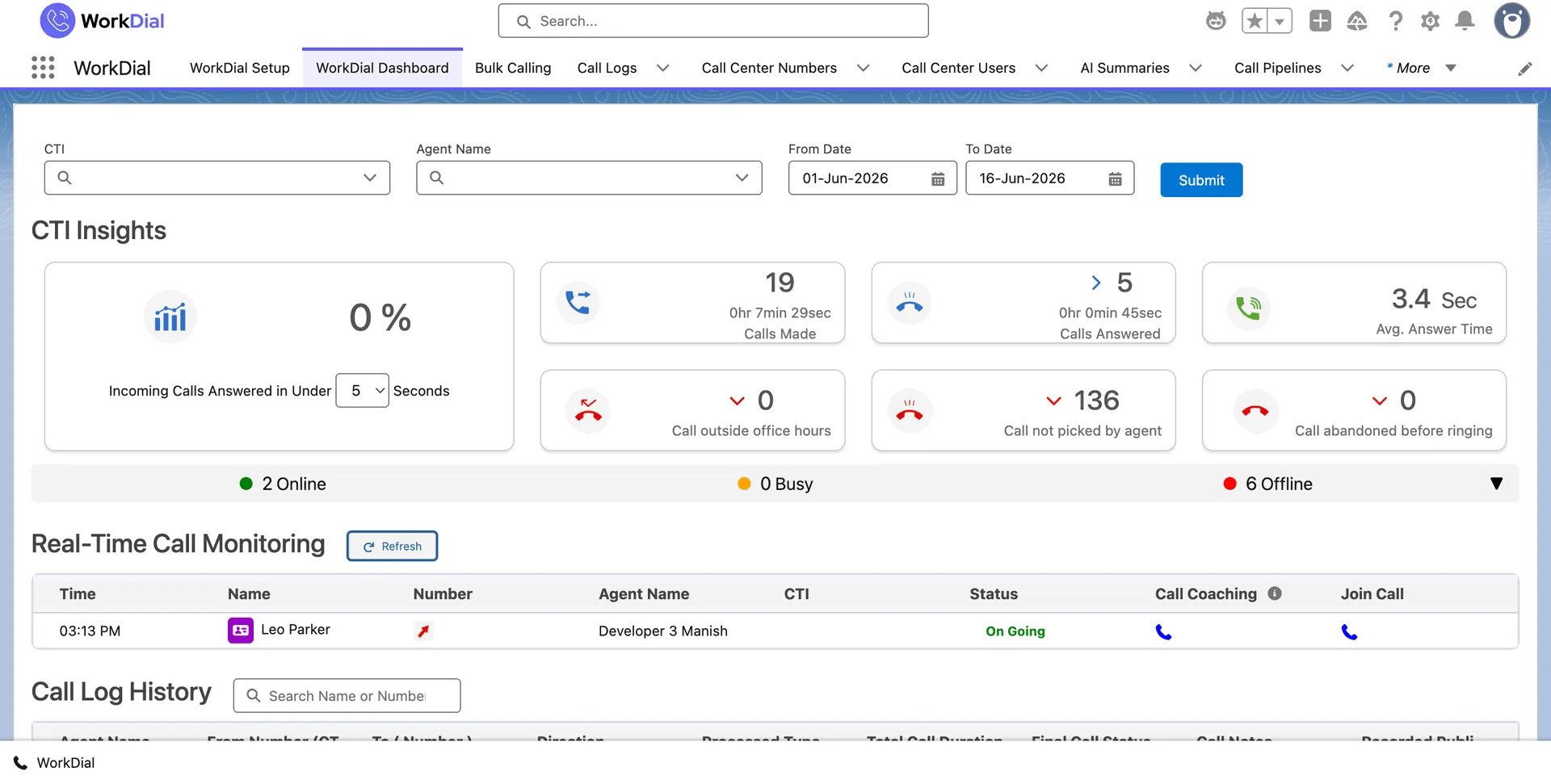
It is the layer that decides which agent takes an inbound call, shows supervisors what is happening now, and records the outcome. WorkDial runs that layer inside Salesforce: routing rules read live Salesforce fields such as the record owner, and the call is written as a Call__c record when it ends. Reporting is standard Salesforce reporting. It suits teams of 20 to 250 employees, not 500-seat contact centers.
 ValueText
 Built by the team behind ValueText, the Salesforce-native messaging platform, rated 4.97 stars across 116 AppExchange reviews.
01The cost of a second system of record
What goes wrong when the phone system holds its own copy of your data?
Routing decides on stale data. If the phone system routes on a synced copy of account owners, a reassignment made this morning is honoured tomorrow. The customer reaches the wrong person today.
Supervisors read two truths. The call center reports volume and the CRM reports activity, and the two never match closely enough to stop the argument about which is right.
Two directories to govern. Agents exist in the phone system and users exist in Salesforce. Onboarding is two jobs and offboarding is two risks.
Field mapping becomes the product. Every routing change turns into a mapping change, and the admin who understands both systems becomes the bottleneck.
02Routing
The rules read the record itself.
Route to the owner, on criteria, or to a queue. Configured in Salesforce, evaluated against live Salesforce fields.
See it live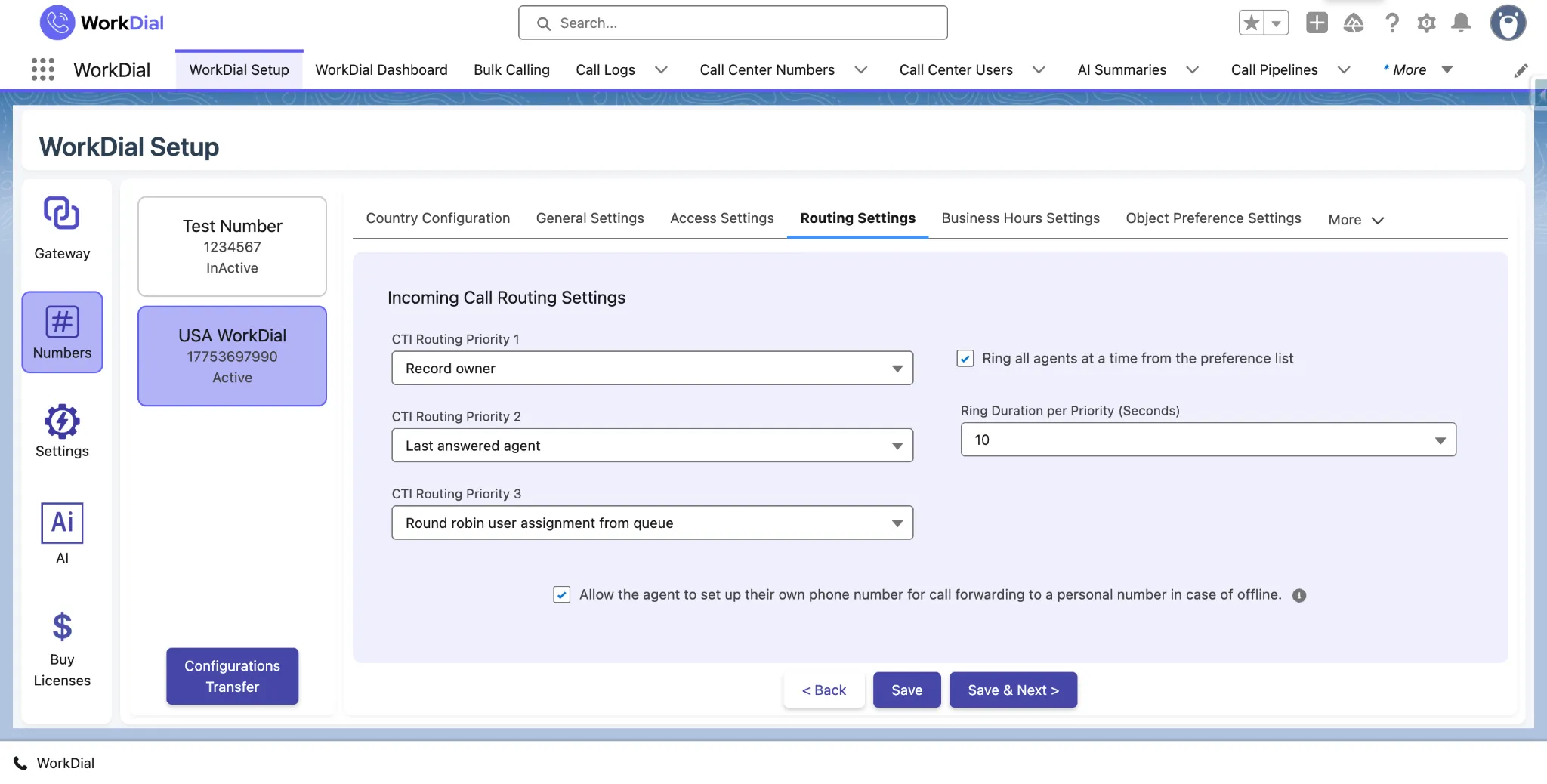
Set up where your admins already work. Routing is configured in Salesforce, so whoever owns your assignment rules owns call routing.
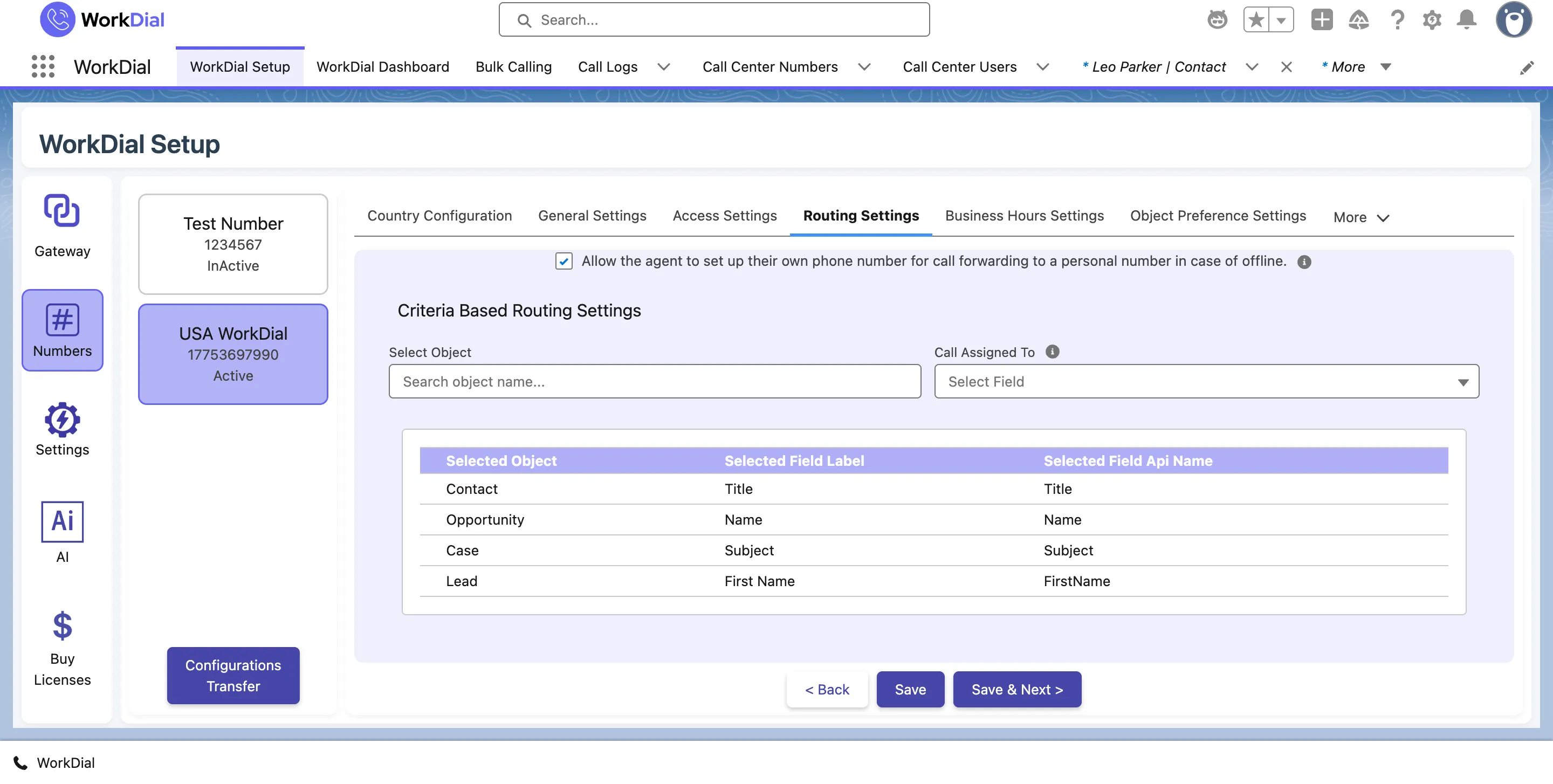
Criteria-based routing on current values. Rules evaluate fields on the record as they are right now: owner, region, tier, or any field you maintain. A reassignment takes effect on the next call, not after the next sync.
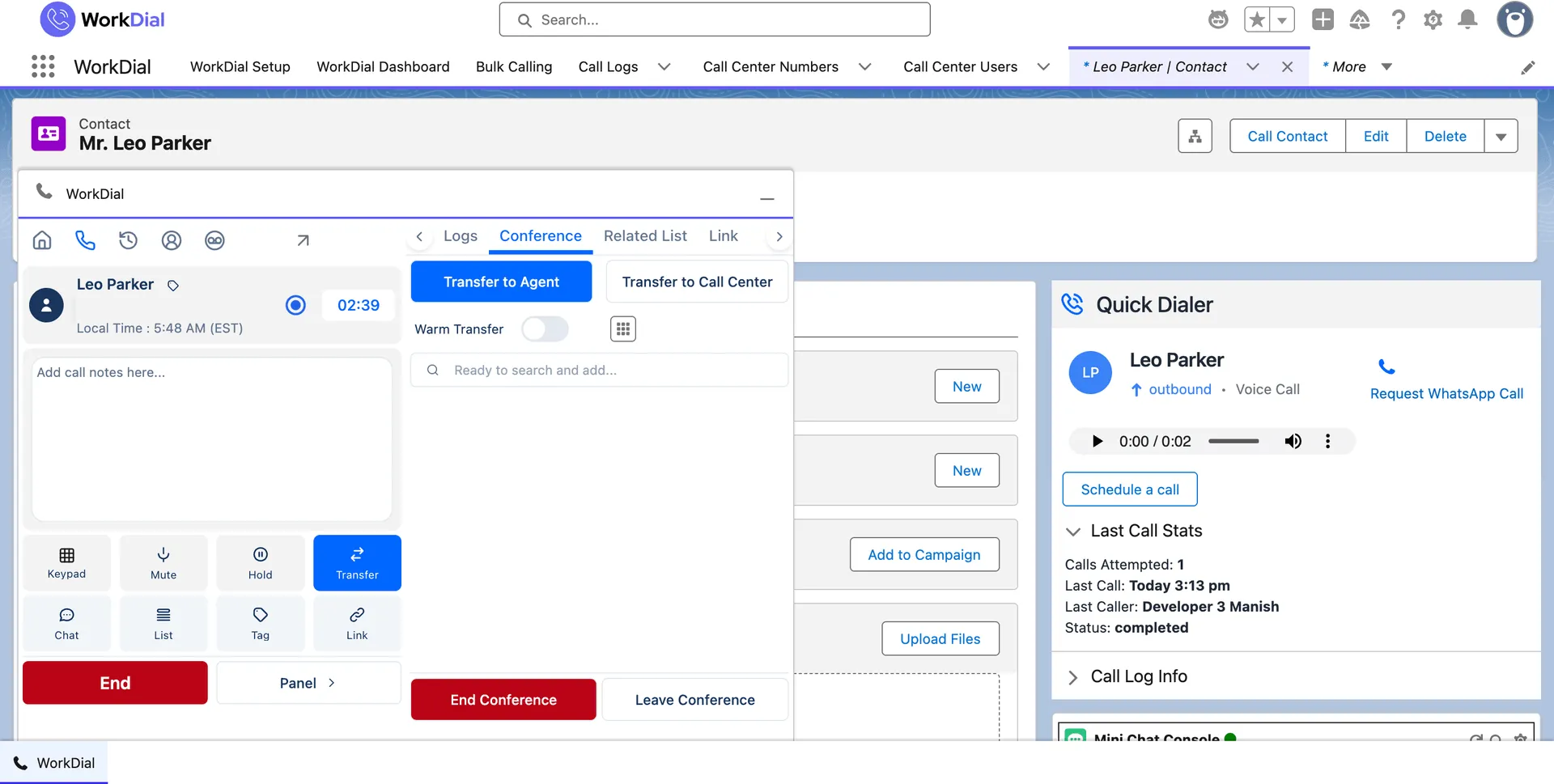
Transfers keep one history. A call passed between agents stays attached to the record it started on, so three handoffs read as one conversation instead of three disconnected entries.
03Supervisors
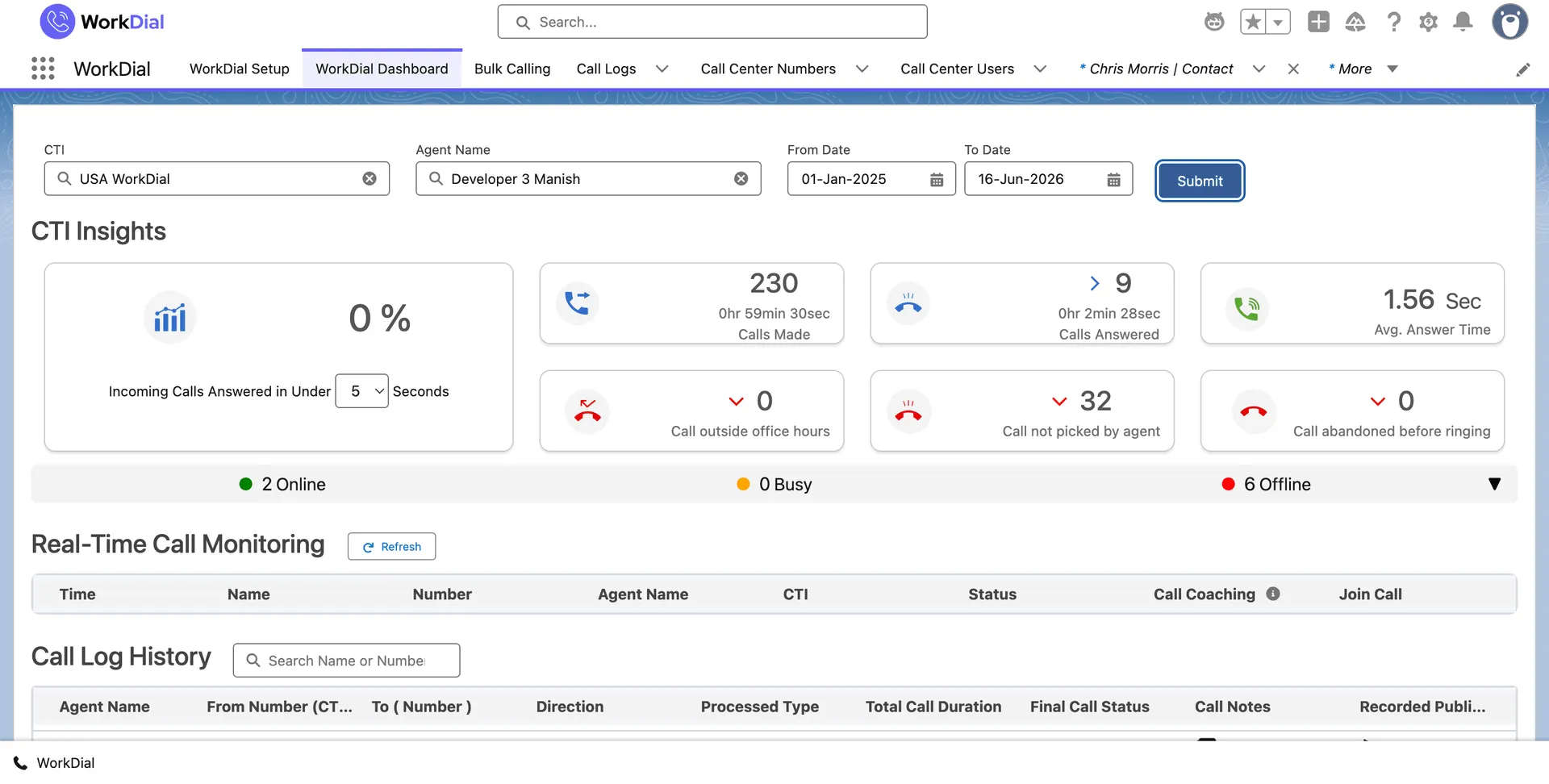
Live activity, then standard Salesforce reports.
Volume, duration, and outcome are native fields, so dashboards use the report builder your admins already have. No analytics product to license.
04Where this does not fit
What WorkDial is not.
Stated plainly, because finding out during an evaluation wastes your time and ours.
Not a 500-seat contact center platform. Advanced workforce management, omnichannel queuing, and heavy compliance tooling are not what this is. At that scale, buy the dedicated platform.
Not a general business phone system. Calling that has nothing to do with Salesforce is not the job. WorkDial is the voice layer of Salesforce, not the company switchboard.
Not for multi-CRM environments. Running inside Salesforce is the whole architecture. If Salesforce is a secondary system for your team, the advantage disappears.
Not a feature-parity claim. Mature platforms have more features. The argument here is architectural: one record, routed on live data, reported in Salesforce.
05How the architecture differs
Routing on your data, or on a copy of it.
Talkdesk, Five9, NICE, and Genesys are dedicated platforms with their own data model, connected to Salesforce. WorkDial puts routing and the record inside it.
06What it means for the business
One system to run, one set of numbers.
Calls reach the right person
Routing reads owner and criteria as they stand now. Changes apply on the next call.
One set of numbers
Supervisor and pipeline reporting come from the same records. No monthly reconciliation.
One directory to govern
Agents are Salesforce users. Onboarding and offboarding happen once.
Questions
Salesforce call center software, answered
What is Salesforce call center software?
Is this a replacement for our business phone system?
Who is it a good fit for?
How are inbound calls routed?
Can routing use fields on the Salesforce record?
Can calls be transferred between agents?
What can a supervisor see?
Do we need a separate BI tool for call reporting?
Why does it matter that the call center runs inside Salesforce?
Where do call recordings live?
How is agent access controlled?
What does it cost per agent?
Get started
Run the call center where the data is.
4.97★ across 116 AppExchange reviews · from the team behind ValueText, the Salesforce-native messaging platform